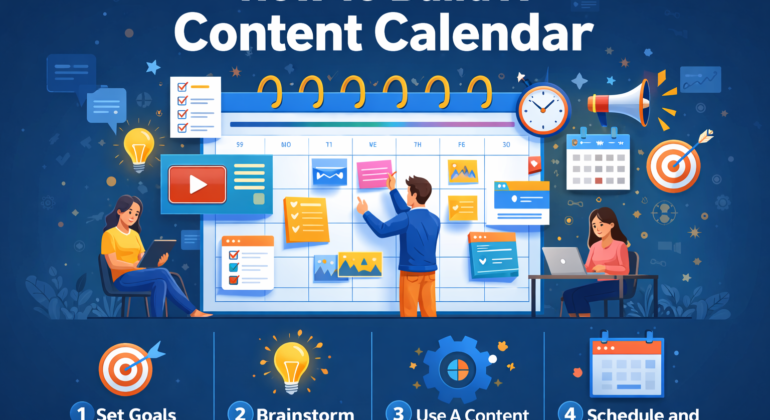

For businesses in 2026, content isn’t just king — it’s the bridge between your brand and your audience. But without a structured plan, even the best content can fail to engage or convert. That’s where a monthly content calendar comes in. A calendar not only organizes your content but ensures it aligns with your business goals, audience needs, and platform strategies.
In this guide, Handlers Creative Agency walks you through how to build a monthly content calendar that actually works, helping you save time, increase consistency, and drive measurable results.
Why a Content Calendar Is Essential
- Improves Consistency
Posting consistently keeps your brand top-of-mind and signals professionalism and reliability. - Enhances Strategy
A calendar allows you to plan content around campaigns, events, product launches, or key dates, ensuring every post has purpose. - Saves Time
By planning ahead, your team spends less time scrambling for ideas and more time creating high-quality content. - Tracks Performance
A content calendar helps monitor engagement, optimize posts, and replicate what works best.
Step 1: Define Your Goals
Before creating your calendar, ask yourself:
- What do I want my content to achieve? (awareness, leads, sales, engagement)
- Which platforms are most important for my brand?
- Who is my target audience, and what do they want to see?
Clear goals shape the type of content you produce and how often you post.
Step 2: Audit Existing Content
Look at your previous content to identify:
- High-performing topics and formats
- Gaps in your content strategy
- Opportunities to repurpose content
This ensures your new calendar builds on what works and avoids repeating mistakes.
Step 3: Choose Content Types and Themes
Variety is key. A strong content calendar includes:
- Educational Content: Tips, how-tos, industry insights
- Storytelling Content: Brand stories, behind-the-scenes, customer stories
- Promotional Content: Offers, product launches, events
- Engagement Content: Polls, questions, challenges
- Visual Content: Photos, graphics, short-form videos
Assign weekly or daily themes to guide content creation and maintain consistency.
Step 4: Plan the Schedule
- Decide how often to post on each platform
- Use tools like Google Sheets, Trello, Notion, or Airtable
- Include columns for: date, platform, content type, copy, visuals, CTA, and status
This creates a clear, actionable roadmap for your team.
Step 5: Prepare and Repurpose Content
- Batch-create content to save time
- Repurpose long-form content into snippets, reels, or infographics
- Ensure all visuals and copy align with your brand voice and style
Consistency in branding and messaging strengthens your audience’s trust.
Step 6: Monitor and Optimize
A content calendar is a living tool. Track metrics such as:
- Likes, shares, comments, and engagement rate
- Website traffic generated from posts
- Conversions or leads generated
Use insights to adjust your strategy and improve results for the next month.
Final Thoughts
A well-structured monthly content calendar is the backbone of effective marketing. It ensures your brand stays visible, consistent, and engaging while saving time and resources.
At Handlers Agency Cameroon, we help brands plan, create, and execute content strategies that deliver measurable results. From social media calendars to short-form videos and branded visuals, we ensure your content works as hard as your business does.